Sesame Processing Plant - Industrial Project Service (IPS)
Sustainable Agri-food Value Chain
Information
Company Description
Industrial Project Service (IPS) is one of Ethiopia’s pioneering consultancy and training providers, with over four decades of experience supporting industrial development. Established in 1982, the company has built a strong institutional foundation and extensive track record, positioning itself as a key player in advancing agro-industrial investments and sustainable value chains in Ethiopia.
Team
The project is led by a multidisciplinary team of economists, engineers, and financial specialists with extensive practical experience in industrial development, project design, and implementation.
Countries of Operation
Ethiopia
Ownership of Company
Local Company (100% local ownership)
Number of years since incorporated
43 years
Stage
Established (mature)
Annual Revenue (in EUR)
EUR 250,000 – 500,000
Number of employees
51–100
Project Pitch
The Sesame Processing Plant project aims to establish a modern processing facility in Ethiopia to produce high-value sesame products for both domestic and export markets. Leveraging Ethiopia’s position as one of the world’s leading sesame producers, the project will source premium raw materials from key regions including Humera, Wollega, and Metema, ensuring consistent quality and supply.
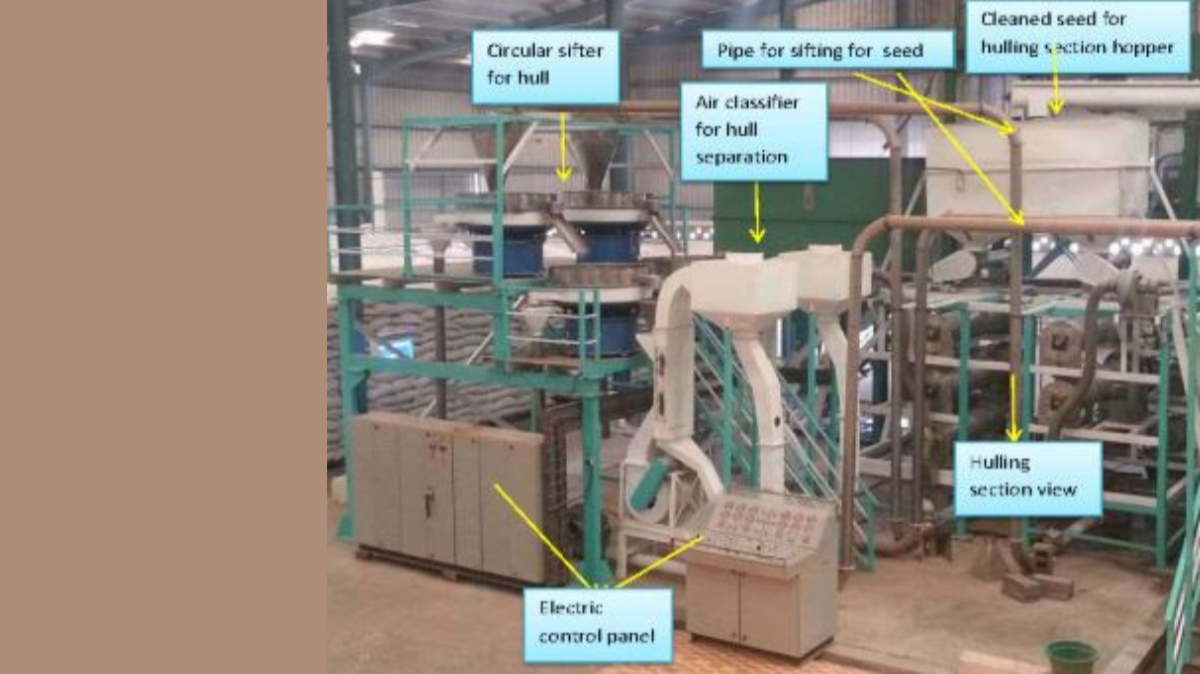
The facility will utilize advanced processing technologies, including cleaning, hulling, roasting, oil extraction, and packaging, to produce hulled and roasted sesame seeds, cold-pressed and refined sesame oil, and tahini. These processes will comply with international standards such as HACCP, ISO, and organic certifications, ensuring product quality, safety, and traceability.
By shifting from raw seed exports to value-added processing, the project captures higher margins while responding to growing global demand for processed sesame products. It also promotes efficient resource use by converting by-products into animal feed, supporting circular production models.
Aligned with Ethiopia’s agro-industrialization and export diversification priorities, the project will reduce import dependency on edible oils, generate foreign exchange, strengthen agro-industrial linkages, and create employment, making it a strategic and commercially attractive investment opportunity.
Total Project Cost (in EUR)
EUR 3,812,512
Financing needs (in EUR)
EUR 2,668,759
Type of financing needed
Debt, Equity, Grant
Planned allocation of fundraising capital
Greenfield (new activity)