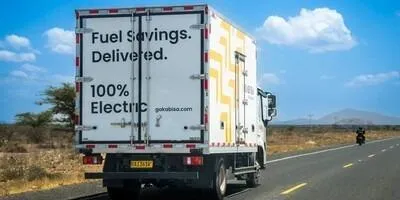
KABISA EV HIGHWAY | Kabisa Electric
Digital and Smart cities
Information
Company Description
Kabisa decarbonizes freight in East Africa by offering an integrated EV ecosystem including electric trucks, charging infrastructure, maintenance, and financing. Operating at scale in Rwanda and expanding regionally, Kabisa enables cost-effective fleet electrification, reduces diesel dependence, and supports logistics companies through a fully integrated platform ensuring reliable, low-emission transport solutions.
Countries of Operation
Rwanda, Kenya, Tanzania, Uganda
Ownership of Company
Local Company
Number of years since incorporated
3
Project Pitch
Kabisa is developing an integrated electric mobility platform to decarbonize freight and logistics across East Africa. The project focuses on deploying a corridor-based network of high-capacity DC fast charging stations along key trade routes connecting Rwanda, Tanzania, and Kenya, enabling electric trucks and buses to operate reliably over long distances.
Kabisa’s business model combines infrastructure deployment with demand aggregation. The company generates revenue through electricity sales to fleet operators and long-term charging agreements with logistics companies. By targeting high-traffic freight corridors, the model ensures higher utilization rates compared to urban charging and improves asset economics. In parallel, Kabisa supports fleet electrification by working directly with logistics operators, helping them transition to electric vehicles through operational integration and flexible financing approaches.
Operations follow a phased rollout strategy. Initial sites are deployed at strategic locations along trade corridors, supported by grid-connected infrastructure and modular charging systems that scale with demand. Real-time monitoring and data-driven optimization ensure reliability, uptime, and efficient energy use. The project builds on Kabisa’s existing operations in Rwanda and expands regionally, demonstrating a scalable and commercially viable model for electrifying freight transport. By enabling electric logistics at corridor level, Kabisa reduces fuel dependency, lowers transport costs, and accelerates the transition toward clean, resilient transport systems in emerging markets.
Team
Kabisa is a privately held company with a founder-led shareholder structure. The company’s equity is primarily held by its founding team and early strategic investors who bring sector-specific expertise in infrastructure development, energy systems, and venture building in emerging markets.
The shareholder base is intentionally aligned with Kabisa’s long-term mission of building critical electric mobility infrastructure across East Africa. Rather than short-term financial engineering, the structure prioritizes patient capital and strategic value-add—particularly in areas such as project finance, policy engagement, and regional expansion. Kabisa maintains a lean ownership structure to enable agile decision-making while ensuring strong governance oversight. Strategic shareholders provide active support at advisory level, contributing to corridor development strategy, capital raising, partnerships with governments and development finance institutions, and risk management in multi-country operations.
As the company scales, Kabisa plans to onboard additional institutional and impact-oriented investors to finance corridor expansion, while maintaining mission alignment and governance discipline. The objective is to combine entrepreneurial execution with infrastructure-grade governance standards suitable for long-term asset development across multiple jurisdictions.
Type of Project
Private Company project
Stage
Early Venture
Annual Revenue (in EUR)
2025: 1.000.000 - 5.000.000 EUR
2024: 250.000 - 500.000 EUR
2023: 250.000 - 500.000 EUR
Number of employees
11-50
Total Project Cost (in EUR)
30 000 000
Financing needs (in EUR)
6 000 000
Type of financing needed
Debt, Equity, Venture Capital
The Company is looking for
Financing
Planned allocation of fundraising capital
Greenfield (new activity for the company)
Expansion (expanding an existing activity)
PPP (Public-Private Partnership)